
INSIGHT 11 / INTERGENERATIONAL STEWARDSHIP / 4-MINUTE READ
Stewarding Conditions We May Never Experience
By David Savio
We shape futures we may never see.
The shade for someone else
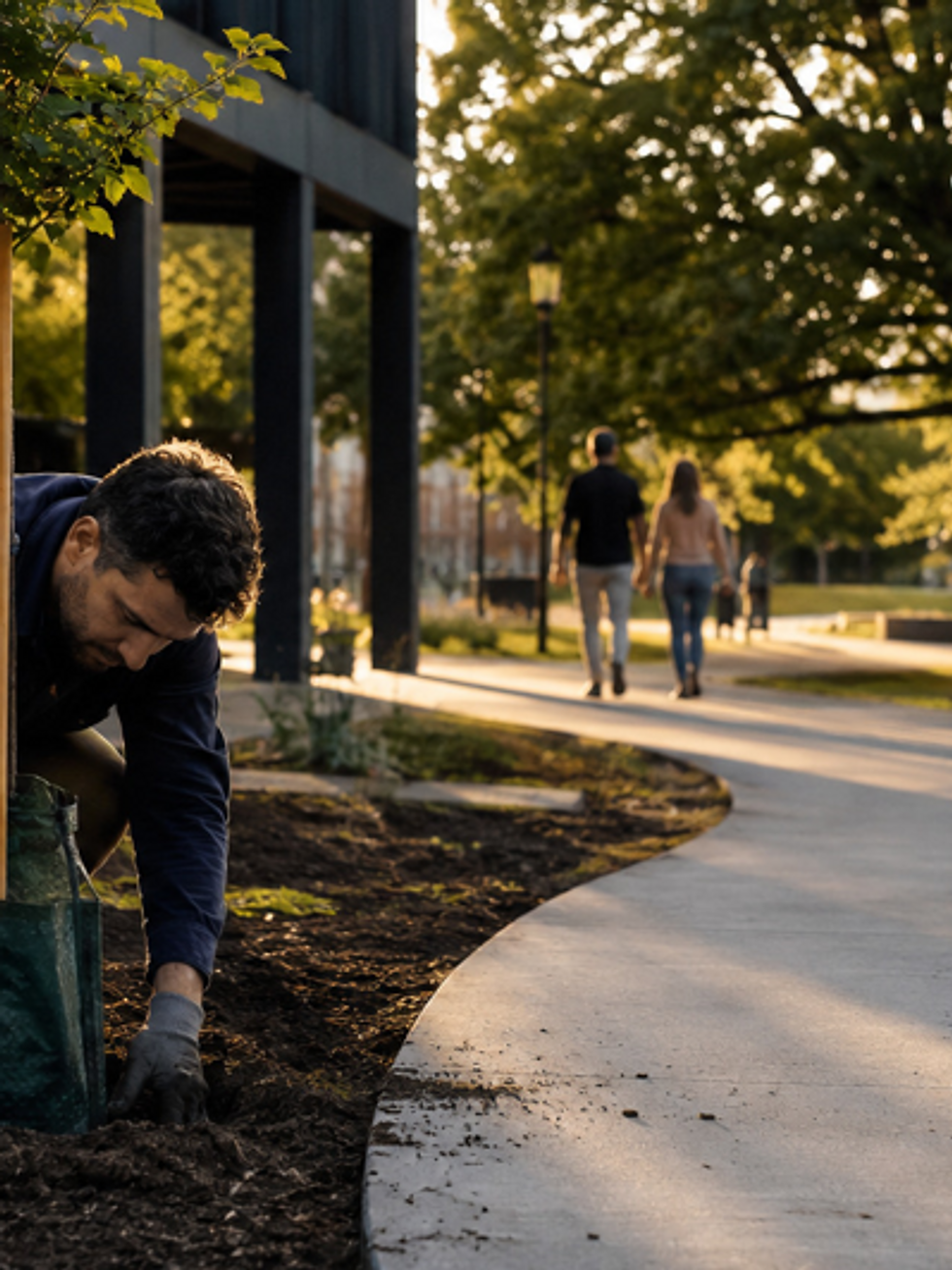
A person plants a tree beside a public path.
They choose the location carefully, protect the young trunk and water it through its first summers.
They know they may never see the tree at full height.
The people who one day rest beneath its shade may never know who planted it. They will simply encounter a cooler path, a place to pause and a living condition made possible by someone else's earlier care.
The act is small in the present. Its meaning unfolds across time.
Much of stewardship is like this. We influence conditions whose most important consequences may be experienced by people we will never meet.
What this reveals
Every generation inherits conditions it did not create: institutions, stories, technologies, beliefs, relationships, conflicts, ways of exercising power and assumptions about what is possible.
We live within that inheritance. We preserve some of it, question some and transform what lies within our reach. Then we leave conditions for others.
Intergenerational Stewardship is the responsible exercise of present influence with regard for the conditions, burdens and possibilities inherited by those who follow.
It does not mean predicting or controlling the future. Future people will face challenges we cannot fully understand and pursue possibilities we cannot define for them. Responsible stewardship therefore protects not only particular outcomes, but their capacity to adapt, exercise agency and revise what we leave.
This horizon applies well beyond environmental decisions. Organisations pass forward cultures, capability, trust, debt,
systems and unresolved burdens. Families pass forward emotional patterns and expectations. Communities pass forward belonging, division, memory and opportunity.
Some inheritors already exist but have little voice in decisions whose consequences they will carry. Others cannot yet speak at all. Their absence from the room increases the care required of those who are present.
Conditions Thinking practice
Use a future-inheritance test for decisions with enduring consequences:
-
What conditions have we inherited in this situation?
-
Which deserve preservation, repair or an intentional end?
-
Who may inherit the benefit or burden of this decision without having shaped it?
-
How reversible will the decision be if our assumptions prove wrong?
-
What capacity, agency and worthy possibilities will remain available to those who follow?
Where possible, include the perspectives of people closer to the future consequences, not only those holding present authority.
Questions to carry
-
What are we passing forward because it is familiar rather than worthy?
-
Which burden are we leaving for others to resolve?
-
What might someone in the future quietly thank us for preserving, repairing or refusing to normalise?
We do not own the future. For a time, we help shape some of the conditions in which it will be lived.
The conditions we create shape what becomes possible.
See Clearly.
Understand Deeply.
Steward Wisely.
Conditions Thinking™ is an organising philosophy for understanding and stewarding human systems through the conditions that shape capacity, judgement, adaptation and possibility.
David Savio is the founder of Conditions Thinking™ and the author of Conditions Thinking: The Invisible Architecture of Human Possibility.
His work helps leaders see beneath visible outcomes and shape what becomes possible. Learn more at www.conditionsthinking.com